
Homemade horse treats can be as simple as rolled oats plus an apple or a carrot. Mix them with a little flour and water, shape them small, and either bake them firm or chill them. Hand out one or two at a time, cut anything round into slices, and leave the molasses out for any horse with a sugar problem.
That’s the whole idea, y’all. The rest is two recipes that actually hold together, some holiday shapes, and the small stuff that keeps a cookie from turning into a call to your vet.
A Treat Is a Bite, Not a Meal

Start with the size of the thing. A 1,000-pound horse that isn’t working eats about 20 pounds of hay a day, roughly 2% of its body weight. Next to that, two little cookies are nothing, and that’s the point. A treat is a thank-you. It shouldn’t nudge the day’s diet one way or the other.
As for how many, when a package doesn’t say, the usual rule of thumb is one or two pieces, no matter how big the treat is. Apples and carrots fall under the same rule.
I’d hold to that with homemade ones too. A batch from your own kitchen still has oats and fruit in it (sometimes molasses on top), and those bring sugar or starch along for the ride. Honestly, the horse won’t count. It’ll just learn that the pocket crinkles and good things happen, so I’d keep the good things small.
No-Bake Oat and Apple Bites

This one’s for folks who don’t feel like turning the oven on. It makes a couple dozen small bites, and the whole thing takes about ten minutes plus the chill.
- 1 cup rolled oats (old-fashioned, not instant)
- 1/2 cup unsweetened applesauce
- 1/2 cup finely grated carrot
- 1/4 cup whole wheat flour, plus a spoonful more if the mix is sticky
- Stir everything together in a bowl until it clumps when you squeeze a little in your fist.
- Roll it into balls about an inch across. Smaller is better here.
- Set them on a plate and chill them until they firm up, an hour or so.
They stay soft. That makes them a good pick for an older horse whose teeth aren’t what they used to be, since worn teeth make hard pieces riskier for a senior.
The flip side is they spoil like fresh fruit does. Keep them sealed up in the fridge, and toss any that look fuzzy or smell off. I’d make a small batch at a time rather than a big one that sits around for weeks.
Baked Carrot and Oat Cookies

These are the crunchy ones, and they travel. Toss a few in a zip bag on your way to the barn and they won’t turn to mush in your jacket.
- 2 cups rolled oats
- 1 cup grated carrot (about two medium carrots)
- 1/2 cup whole wheat flour
- 1/3 cup water, give or take
- 1 tablespoon molasses, only for a horse with no sugar issues (skip it otherwise)
- Heat the oven to 350°F and line a baking sheet with parchment.
- Mix the oats and flour, then stir in the carrot, plus the molasses if you’re using it. Add the water a spoonful at a time until the dough holds together.
- Press it out about half an inch thick and cut it into small squares or shapes.
- Bake 20 to 25 minutes, until the bottoms are brown and the tops feel firm. Let them cool all the way on the sheet.
Thin cookies dry out better than thick ones, and dry is what you want, because moisture is what lets mold get going. Want them crunchier still? I’d turn the oven off and leave the tray inside while it cools down. They come out harder and keep longer.
Once they’re cool, store them somewhere cool and dry in a container with a lid that seals, so rain and bugs can’t get in. Mice either. A tight bucket in the feed room works fine.
Holiday Shapes Without the Choke Risk

Here’s the fun part. Roll the cookie dough out and cut it with whatever cutters you’ve got in the drawer. Stars and little horseshoes both work, and a candy cane is kinda perfect for December.
One rule, though. Use the small cutters. A big gingerbread-man cookie looks great in a photo, but larger horse cookies raise the risk of choke, and so do big chunks of fruit or vegetable. Cut small shapes, or break the big ones up before they go near a mouth.
Skip the icing. I know, a little piped frosting looks adorable on a Christmas star. But frosting is just sugar with a nicer outfit on, and the horse doesn’t care what the cookie looks like. It cares that it’s a cookie.
Peppermints are the classic Christmas extra, and plenty of horses go nuts for them. They’re fine in moderation. I wouldn’t press one into every cookie, though, because that stacks sugar right on top of the oats.
Giving a bag to a friend at the barn? Tie on a tag that lists what’s in them. Their horse might be on a diet you don’t know about, and the tag lets them check before anything gets handed over.
Cut Apples and Carrots the Safe Way

Plain fruit and veggies are the easiest treat of all. You still need a knife. Slice the apple, and break a big carrot into smaller pieces before it goes anywhere near a horse. Sharing a peach or an apricot? The pit comes out first, because it can get stuck too.
Here’s why it’s worth the fuss. Choke in a horse is a blockage in the food pipe, not the windpipe, so the horse can still breathe. It looks awful anyway, with feed and saliva coming out of the nose and the horse coughing with its neck stretched out long.
If you see that, take all the feed away and call your vet right then. Don’t stand around the barn hoping it clears.
For a senior with worn or missing teeth, I’d lean on the soft no-bake bites or a few thin apple slices instead of the crunchy cookies. Same reward, a lot less chewing.
Keep These Out of the Treat Bowl
Some kitchen scraps don’t belong in a horse at all. Skip persimmons and avocados. Tomatoes and potatoes are out too, since they’re in the nightshade family. Broccoli and cauliflower stay off the list as well, because broccoli can build up gas in the hindgut.
Lawn clippings are a big one, and folks usually mean well with them. A pile of fresh-cut grass can mold and ferment fast, and that can make a horse sick. Grass growing in the pasture is great. Grass out of the mower bag isn’t.
Anything moldy, or anything a mouse has been into, goes straight in the trash.
One more for the show crowd. If your horse competes under drug rules, read every label before it goes in the bowl. Valerian and poppy seeds can lead to a positive test, and so can licorice, or cocoa and tea leaves.
Hand It Over Flat, or Use a Bucket

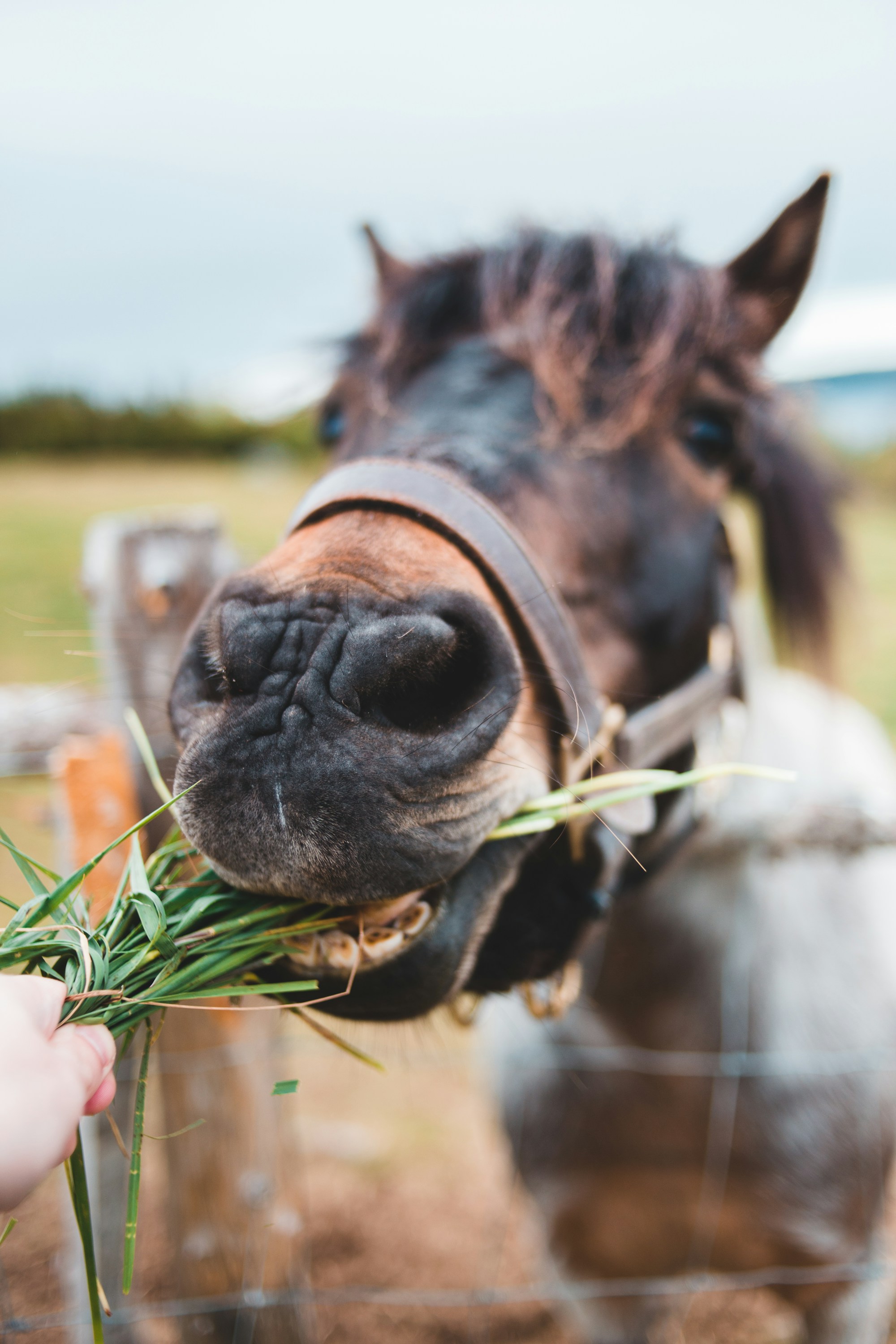
How you give a treat matters as much as what’s in it. Set it in the middle of your palm with the hand open and flat. A horse’s lips are pretty good at finding a cookie. They’re not so good at telling a cookie from a fingertip.
Treats can make some horses pushy, too. A horse that figures out your pocket pays out may start nosing at it, and nosing turns into nipping. If that starts, switch to a bucket. Drop the treat in and let the horse eat it from there, same reward with no fingers involved.
Nipping isn’t always about food, either. If you’re wondering what’s behind it, here’s whether horses bite to show affection, and if the pushiness goes way past treats, these signs of a disrespectful horse are worth a read.
Here’s my two cents. Ask for something small before the treat shows up. A step back works, or standing quiet at the gate. Then the cookie is a paycheck instead of a toll, and I think that’s a better deal for everybody, the horse included.
Horses That Should Skip the Sugar

Now the serious part. Oats are starchy, and apples and carrots carry sugar. So does molasses, obviously. For most healthy horses a couple of cookies is no big deal. For some horses it’s a real problem.
If a horse is overweight, or has equine metabolic syndrome or PPID (Cushing’s), leave out treats made with sugar or molasses. The same goes for PSSM and for any horse with a history of laminitis. Think of that horse the way you’d think of a person with diabetes. The oat recipes up top may not suit a horse with metabolic issues at all.
That’s a talk to have with your vet, and it’s worth having before the holidays rather than after a sore-footed morning. Ask what that particular horse can have as a reward, and how much. Every horse with one of those conditions is managed a little differently, so no general list can make that call for you.
Turns out the best treat for some horses is a scratch on the withers and a few minutes of company in the paddock. No sugar in that at all, and good luck finding a horse that turns one down.
So bake small, slice the fruit, and save the sweet stuff for the horses that can handle it. Happy trails.
A Must-Read:
Wondering If Your Foal Can Chomp On Alfalfa? Let's Find Out
So Can Foals Really Eat Grain? Here's My Scoop
Should You Really Give Your Horse Electrolytes Every Single Day?

How Much Garlic Can I Feed My Horse?

How Much Grain Should I Feed My Horse?
Should I Feed My Horse Before Riding?