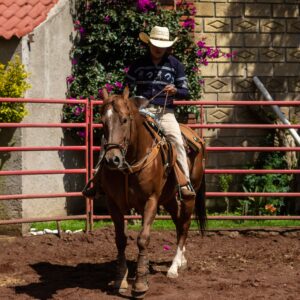
Horse people have a saying that goes “no foot, no horse.” It sounds like barn-aisle folklore until you think about what a hoof does all day. Every pound of your horse sits on four of them, over mud and gravel (and, in January, ice).
Four small feet. That’s the whole machine.
Good hoof care comes down to four habits, y’all. Pick out the feet every day, learn what a healthy one looks like so you notice when it changes, keep the farrier on a schedule, and call your vet when a foot is hot, sore or suddenly won’t take weight. None of it needs fancy gear. A first-time owner can learn the daily part in an afternoon, and honestly, I think it’s the cheapest insurance anywhere in the barn.
Why a Hoof Gets a Look Every Day

A hoof is a tough, growing shell, and it gets away with a lot. It can’t tell you something’s wrong, though, until the horse is limping. The daily pick is how you hear about trouble early. You’re checking for stones, debris, cracks, splits, thrush and, on a shod horse, loose or worn shoes, and the whole job takes a few minutes.
Pick the feet out every day. Picking several times a week is the least a horse can get by on, and daily beats it. A stone left in a sole is exactly the sort of small thing that turns into a sore foot.
Skipping a day is how that stone gets missed.
Daily handling pays off in a second way. The more often you lift a foot, the more you know what’s normal for your horse: the usual warmth, the way the frog sits, how he stands while you work. You build that picture with your own hands at the barn, one pick-out at a time. To fit it into a routine, our daily horse care routine for first-time owners shows where it sits between feeding and turnout.
What You Need Before You Pick Up a Foot
The kit is short. A hoof pick, a metal hook with a handle that costs less than a sandwich. A stiff brush to sweep the sole and the heel bulbs once the dirt is loose. A bucket to pick into, so the muck doesn’t land where your horse is about to step. And a safe place to stand him: tied securely, or held by someone who knows how to hold a horse.
That last one gets skipped. Tie the horse securely or have someone hold him before the first foot comes up. A horse loose in the aisle can wander off with your hand still on his leg. For the rest of the grooming box, the horse grooming kit guide covers every brush and what it’s for.
Picking Up a Front Foot, Then a Hind One

Start at the shoulder, facing the tail. Stand beside the horse and lean into him a little, then run your hand down the back of the front leg toward the foot. That slide tells him what’s coming, and most horses shift their weight and hand you the foot. Hold the pastern with one hand and pick with the other, and keep the horse close to your side rather than at the end of your arm.
Then work from heel to toe, keeping the point of the pick away from the frog itself, which is the V-shaped pad in the middle of the sole. Clean thoroughly around the frog and the heels, because that’s where packed-in dirt hides.
Take your time.
Hind feet work the same way, with one change. For a back foot, you lift the hoof and rest it on your thigh, then step back slightly so the leg stretches out. That gives the leg stable support while you hold it up, and it’s a safer position for you too. On a hind leg, run your hand down the front of the leg instead, the opposite side from a front one.
Standing for the feet is a skill a horse has to be taught, so a fidgety one isn’t being rude. Go slow. Put the foot down the moment he’s calm, then ask again. If he flinches when you press near the frog, I wouldn’t push through it. Make a note and tell your farrier or your vet.
That’s it.
What a Healthy Hoof Looks Like

You don’t need a farrier’s eye to know the basics. A healthy hoof wall is smooth and free from cracks or lines. The coronary band, which is the hairline where hoof meets leg, should sit level with the ground when the foot is set down. On flat ground, the front hooves slope at about 45 to 50 degrees and the hind ones at 50 to 55, in line with the pastern.
Lines running across the wall are the ones to watch. Horizontal lines can be signs of past laminitis or poor nutrition, so a new set of them is worth mentioning to your vet. A hoof that’s growing out long, flared at the bottom or off-balance is one the farrier needs to see soon, because balance is the main goal of every trim.
The frog and the grooves beside it are where thrush starts. It usually begins in the central groove of the frog, and a horse with it may flinch when you press on that spot during cleaning. Horses with deep grooves and narrow heels get it more often, and it can turn up even in a clean, dry setup. So thrush isn’t a sign you’ve failed, just a sign to get someone qualified to look.
Breathe.
Mud, Dust and Winter: What the Weather Does

Moisture is the hoof’s tricky balance. A horse who lives in a muddy paddock all week keeps his feet too wet, and that can lead to abscesses and infections such as thrush and white line disease. A horse on baked ground has the opposite trouble, with feet that are very dry and hard and can chip and crack. A bit of moisture is exactly what a hoof wants.
Dry weather has a fix too. In very dry conditions it may help to overflow the water trough a few times a week so the horse stands in a little water, and hoof dressings can hold moisture in, so ask your farrier which one suits your horse. Whichever way your weather swings, a clean, dry place to stand is the best fix you can give: hardstanding in the field, clean bedding in the stall.
Winter slows growth, since hooves grow slower in cold winter months, but a slower hoof still needs its trim. If your horse spends winter out in the pasture with a rug on, check whether he’s also standing in a bog. Our guide on whether horses need blankets in the rain covers the wet-weather side of that.
How Often the Farrier Comes

Most horses need a trim somewhere between every 4 and every 8 weeks, and the number moves with the horse. A shod horse sits toward the short end, usually 4 to 6 weeks. A lightly used barefoot horse can stretch to 10 to 12 weeks, with the flares rasped back in between. If you want one number to start from, about 6 weeks is the usual figure.
Age and season shift it, and so do the work and the footing. A mature horse grows about 3/8 inch of hoof a month, a weanling closer to half an inch and a senior closer to a quarter. A horse in hard training in shoes may need a visit every 4 to 5 weeks. An older pasture pet might stretch to 8.
The simplest rule for timing a visit: don’t let a foot grow longer than 3/8 to 1/2 inch past its trimmed length. Your farrier can tell you whether your horse needs shoes at all, and will set the schedule that fits him. Allow plenty of lead time when you book, and have a clean, level, well-lit spot and a calm horse ready.
When It’s Your Vet’s Call
A farrier trims and protects the foot, and a vet diagnoses and treats a horse in pain. For a lame horse, a vet and a farrier working together is often the best team. So which one do you call, and when?
Call your vet right away if your horse is suddenly lame and won’t put weight on a foot. A hoof abscess, which is an infection trapped inside the hoof, is a common cause, and it often appears suddenly. The hoof or lower leg may feel warmer than usual, there can be a strong digital pulse near the fetlock or pastern, and sometimes there’s swelling or a foul smell. If something sharp is stuck in the foot, leave it where it is and phone your vet at once.
Some jobs belong to your farrier: a long toe, flares, a loose shoe, a wall that has chipped away. Others belong to your vet, and the rule of thumb is simple. A horse that’s lame, hot, swollen or won’t stand on a foot gets a call to your vet. If you can’t tell which it is, ring anyway. I’d rather you hear “that’s fine” than wait and find out.
One more thing worth saying. Plenty of “my horse is acting up” problems are really a mouth or a saddle problem wearing a behavior costume, and a sore foot can wear the same costume. Check the teeth, the fit and the feet before you blame the horse.
Simple, and it saves arguments.
Pick them out, y’all, learn what normal looks like and keep the farrier’s number handy. Saddle up when the feet are right. Happy trails.
A Must-Read:
What is the number one cause of Colic in Horses?
Why Do Horses Need Shoes? And When They Don't
A Close Look at Why Wild Horses Ain't Got No Need for Shoes
Should I Add Salt to My Horse's Feed?
What Goes in a Horse Grooming Kit (and How to Use Each Brush)
Can Electrolytes Cause Colic in Horses?