
Horses sleep standing up because their legs can lock. A system of tendons and ligaments called the stay apparatus holds the joints straight, so the big muscles can switch off and the horse can doze without folding up like a lawn chair.
It’s Jack here, and that’s the short answer. The part most folks miss is the catch: standing sleep is only the light kind. For the deep, dreaming kind, a horse has to lie flat on the ground. A horse that never lies down will run out of that sleep, and that’s when the trouble starts.
So let’s look at how the locking works, front legs and back, why a prey animal bothers, how much sleep a horse really gets, and what to watch for at the barn if yours never seems to lie down.
The Stay Apparatus Does the Holding

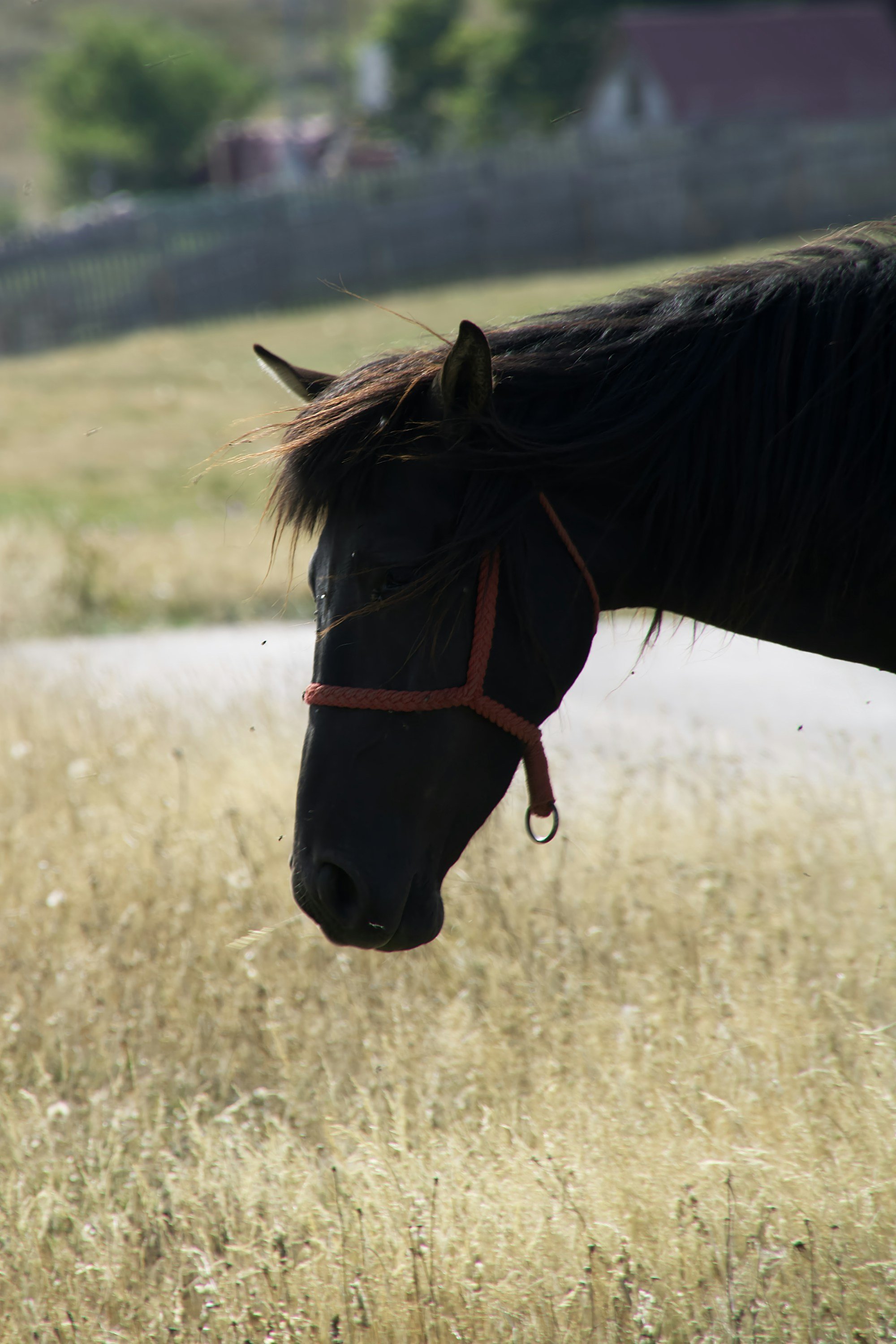
Picture a horse in the pasture after lunch. Head low, lower lip hanging, eyes half shut, ears flopped out to the side. It looks like it might tip over. It won’t.
The stay apparatus is the reason. It’s not one bone or one joint. It’s tendons and ligaments working with a few muscles, and together they let a horse stand with hardly any muscle effort at all. That’s how the reference books put it, and honestly it’s one of the neatest bits of engineering in the whole animal.
In the front legs, it switches on by itself. When the muscles relax, the front legs lock. Little ligaments called check ligaments act like tension bands, holding the knee, the fetlock and the foot bones steady. The shoulder and elbow get held straight too. Nothing for the horse to think about. It just relaxes, and the legs take the weight like a set of posts.
That’s a big deal for an animal that can weigh half a ton or more and stands on four skinny legs. Without some kind of lock, those legs would tire out fast.
The Back Leg Hooks Its Kneecap in Place
The hind legs need a little help from the horse. To lock one, it shifts its hip. That slides the kneecap (the patella) up, and a ligament on the inside of the knee catches over a bump at the bottom end of the thighbone. Think of a coat hanger hooked over a rail.
With that hooked, the stifle can’t bend. And here’s the clever part: the stifle and the hock are tied together, so they bend and straighten as a pair. Lock the stifle and the hock is locked too. The whole hind leg turns into a prop.
That’s why a dozing horse stands on three legs with one hind hoof tipped up on its toe. The locked leg holds the weight. The tipped one is resting. Every so often the horse shifts over and rests the other side, so all four legs get a turn.
If you’ve ever walked up on a horse cocked like that and wondered if it was lame, now you know. It’s napping. Say its name before you touch it, though. A horse startled out of a doze can kick first and look later.
Why a Prey Animal Naps on Its Feet

Horses are prey animals, and that explains most of what they do. Out in the open, the thing that eats a horse is a predator, and lying down makes any animal easier to catch.
A horse that’s flat on its side has to roll up onto its chest, get its front legs out and heave its back end off the ground before it can run. A horse that’s dozing on its feet just opens its eyes and goes. Standing sleep buys those few seconds.
That same instinct is why horses sleep in lots of short naps instead of one long night like we do. A prey animal has to be ready to flee at a moment’s notice, so it never checks out for long. You’ll see it in your own horse: a doze here, a doze there, all through the day and night.
Standing Is Light Sleep. Dreaming Needs the Ground

Here’s where the locking legs run out of road.
A horse can get light sleep standing up. Slow-wave sleep, the kind that rests the body, works fine on locked legs. But REM sleep, the dreaming kind, is different. During REM every muscle goes slack, and that includes the muscles that help hold the stay apparatus in place. A horse in full REM on its feet would fall down. So it has to lie down for it.
The reference numbers on how that sleep comes are kinda neat. Much of a horse’s sleep comes in short bouts of about 15 minutes. A bout runs about five minutes of slow-wave sleep, then five minutes of REM, then five more of slow-wave. The good news is a horse doesn’t need much lie-down time. An hour or two every few days covers the minimum REM it needs.
So when you see your horse stretched out flat in the sun, legs straight out, maybe twitching or grunting a little, leave it be. That’s the sleep it can’t get standing up. I know it can look scary the first time. Usually it’s just a horse doing its homework.
How Much Sleep a Horse Really Gets

This is where the numbers get messy, and I’d rather tell y’all that than pretend there’s one answer.
The figure you’ll see most is about two and a half hours of sleep in 24 hours, on average. A research team at the Ludwig-Maximilian University in Munich gave stabled horses about 3.5 hours a night, with REM at about 30 minutes of that. And Dr. Katherine Houpt, a horse behaviour expert from Cornell’s vet school, has put it at about six hours a day, with around a quarter of it REM.
The spread has a plain cause. Different horses, different stables, and different ideas of where dozing stops and sleep starts. A horse can spend anywhere from 4 to 15 hours a day in standing rest, and not all of that is sleep. Some of it is just standing there with the motor idling.
What every source agrees on: it’s short bouts, most of it is light, and the deep part needs the ground.
Somebody Always Stands Guard

Watch a herd for an afternoon and you’ll usually spot it. A couple of horses are flat out or lying on their chests, and one or two are standing nearby, awake, ears working.
Horses sleep better in groups for exactly that reason. Some can sleep while others keep watch. A horse kept entirely alone may not sleep well, because its instincts are to keep a constant eye out for danger, and there’s nobody to hand the job to.
My take: a buddy is the cheapest sleep aid you’ll ever buy. A pasture mate is best. A friendly neighbour over the fence or across the barn aisle helps too. If you’ve got a horse living alone and it never seems to lie down, that’s the first thing I’d look at.
When a Horse Won’t Lie Down
A horse that never lies down doesn’t just get grumpy. After several days without REM, it can slip into REM sleep while still standing, and down it goes. It’s not the same thing as narcolepsy, though from the outside it can look alike.
That Munich team looked hard at this. They watched 36 horses that had been collapsing, each for 24 hours. The horses went down anywhere from 4 to 199 times in that one day, and how often depended on how much each horse had been lying down. Over 90% of them had injuries from it. The knees were hurt in 72.4% of the horses and the fetlocks in 68.4%. Head injuries showed up in 31% and the hocks in 18.4%.
The team found two main reasons they weren’t lying down: the way they were kept, or pain. In half the horses the collapses started right after some event, like a move to a new stable or a leg problem. A third of them didn’t have the space the German stall guidelines call for. Pain from sore joints, a sore back, ulcers or a breathing problem can all make getting down and up again hurt.
So here’s what to look for: fresh scrapes or bald spots on the front of the knees or fetlocks, a horse that buckles or stumbles while dozing, or a horse you never once find lying down or with shavings in its tail. Any of those is worth a call to your vet. Don’t guess at the cause and don’t treat it yourself. Your vet can tell a stall problem from a pain problem, and that’s the whole question.
Make Lying Down Feel Safe

If the problem turns out to be the setup, a few changes help a lot. Most of these come from Dr. Houpt’s work.
Bedding matters. Horses lie on their sides much longer on straw than on shavings, and they lie down more when the bedding is deeper. Given a choice, they never lie down on concrete. If you’re stingy with bedding, that’s the first thing I’d change. One trick she mentions: drop a fresh bale in a pile so the horse can lie down on it before you spread it.
Space matters too. She tells of a big mare who refused to lie down in a small stall and went to her knees at night. Doubling the stall width fixed it. If your horse is big and the stall is snug, that might be your answer.
Out in the pasture, soft grass beats bare, hard dirt. Calm helps as well, since stress cuts sleep, the deep part most of all. Show horses on the road often sleep less, so expect a tired horse after a long haul.
And if you want to know what really goes on at night, a cheap barn camera tells you more than any guess. You’ll find out fast whether your horse lies down, for how long, and where.
Your horse sleeps standing up because its legs lock, front ones by themselves and back ones with a hook of the kneecap. That’s light sleep. Deep sleep needs the ground, about an hour or two every few days at the least, and a horse that feels safe gets it.
If you want more on the lying-down side, I wrote up 15 things to know about horses sleeping on their sides and a quick answer to whether horses lie on their side. And if bedding’s on your mind, here’s whether horses need bedding in their stalls.
Happy trails, and let ’em nap.
A Must-Read:
Why Do Horses Rub Their Teeth on Metal? The Great Mystery Solved

Why Does My Horse Breathe on Me?
Beyond the Bridle: The Mystery of Why Horses Curl Their Lips?
Spinning Secrets: Why Do Horses Go in Circles?
Why Does My Horse Lean on Me?

Why Your Horse's Corpse May Look Pregnant – Bloating After Death