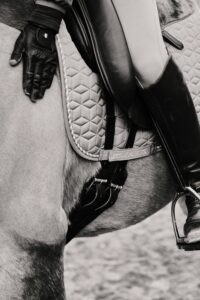
Your first riding lesson starts on the ground, not in the saddle. You’ll meet the horse, brush it, watch the tack go on, and only then climb up from a mounting block to practice walking and stopping, plus a little steering, usually with the instructor close by or holding a lead line. Show up in a certified helmet (or ask the barn to lend one), boots with a small heel and long pants, and you’re ready.
That’s honestly most of it. The rest is knowing what to ask before you book, so nothing on the day catches you off guard.
Questions to Ask the Barn Before You Book

Call or message the barn first. A good lesson program is happy to answer questions, and how they answer tells you a lot.
Here’s what I’d ask:
- Private or group? For a very first ride I’d pay for a private lesson. You get the instructor’s whole attention, and nobody’s horse is waiting on yours.
- Do you lend helmets, and are they certified? You want a yes to both.
- Is there a rider weight limit? Most lesson barns have one, and it protects the horse, not your feelings.
- What should I wear, and what should I leave at home?
- What happens if it rains? Some barns ride in a covered arena, some cancel.
That weight question trips people up, so here’s the reason behind it. The old rule of thumb, set for cavalry horses back in 1920, is that a horse carries no more than 20% of its body weight, and that weight counts the saddle and bridle too, not just the rider. Light horses carrying 25 or 30% of their weight work harder and end up sorer the next day than horses carrying 15 or 20%. So when a barn asks your weight, it’s matching you to a horse that can carry you comfortably for the whole hour. Tell them the real number. Nobody at the barn is judging.
Dress for the Saddle, Not the Gym

The helmet comes first. Head injuries cause 60% or more of horse-related deaths, and helmets certified to the ASTM/SEI standard have cut riding head injuries by 30% and severe ones by 50%. Look for the SEI seal inside. It sits next to the date the helmet was made, which matters, because a helmet should be replaced after any fall where it takes a hit and after 5 years of use even if it looks fine.
Below the helmet, keep it simple. Boots need a small heel so your foot can’t slide all the way through the stirrup. Sneakers don’t have one, and that’s the whole reason barns turn them away. Wear long pants without a thick inside seam, because the saddle rubs right there. Skip dangly jewelry and anything that flaps.
There’s a full list, piece by piece, in our guide to what to wear horseback riding. For lesson one, the helmet and the boots are the two that can’t be swapped for something else.
Meeting Your Horse on the Ground

Most first lessons begin with the instructor bringing you to the horse in the barn aisle or at the paddock gate. This part feels small. It isn’t.
A horse sees almost all the way around itself, but it has blind spots right in front of its nose and right behind its tail. Walk up to one from behind and it may not know you’re there until you touch it, and a startled horse can kick. So you approach at the shoulder, talk to it in a calm voice as you come, and put a hand on the neck or shoulder first. From that spot you’re clear of both the front feet and the back ones.
You’ll probably lead the horse a few steps, too. You walk on its left side, level with its shoulder, holding the lead rope in your right hand and the extra coiled in your left. Never wrap the rope around your hand. If the horse jumps sideways, you want to be able to let go.
Grooming Comes First, and It’s Not Busywork
Then the brushes come out. A rubber curry comb goes on first, in small circles, to loosen dirt and dead hair. A stiff brush flicks that dirt away in the direction the hair grows, and a soft brush finishes the face and legs. Last comes the hoof pick: you run your hand down the leg, lean a little, and most lesson horses lift the foot for you because they’ve done it a thousand times.
Grooming does real work. It knocks off the grit that would sit under the saddle and rub, and it’s when you’d notice a cut, a hot spot or a stone wedged in a hoof. A loose shoe or a crack in the hoof wall is the farrier’s call, and anything that looks sore is a job for your vet, not for you or the instructor’s best guess.
Curious what all those brushes are called? Our horse grooming kit guide walks through each one.
Watching the Tack Go On

On lesson one, the instructor will tack up the horse with you watching, or walk you through it. The pad goes on, then the saddle, a little forward, then slid back into place so the hair lies flat underneath. The girth goes around the belly and gets tightened in steps, not all at once. A lot of horses puff up their belly when the girth first comes snug, so it gets checked again right before you get on.
The bridle is trickier, and nobody expects you to get the bit in on day one. What you can do is learn the stirrup trick: with the stirrup still up near the saddle, put your fingertips on the buckle at the top of the leather and pull the stirrup toward your armpit. If it reaches, that’s about the right length to start with. It’s not exact, but it gets you close before you’re up there fiddling with buckles.
Climbing On From the Mounting Block
Time to saddle up. Riders get on from the horse’s left side, the same side you led from, and most barns use a mounting block for beginners. It’s easier on you, and it’s easier on the horse’s back than a rider hauling themselves up from the ground. (Getting on from the ground is a skill for later, and we’ve got a guide to mounting from the ground when you’re ready.)
The steps go like this. Gather the reins in your left hand, with a little contact so the horse doesn’t wander off while you’re half on. Put your left foot in the stirrup, toe pointing toward the horse’s front so it doesn’t jab its side. Hold the front of the saddle, push up off your left leg, and swing your right leg high over the horse’s rump. Then sit down gently. Don’t drop. Find the right stirrup with your toe, and you’re up.
Your heart will be going a bit. Totally normal. Lesson horses are picked because they stand still for exactly this.
What You’ll Actually Do Up There: Walk, Halt, Steer

Here’s the part people picture, and it’s slower than the movies. You’ll sit tall, with your ear, shoulder, hip and heel roughly in a line, and your heels a little lower than your toes. Eyes up and ahead, not down at the horse’s neck. Many instructors keep a beginner on a lead line or a longe line for the first ride, so the horse stays on a circle while you learn the feel.
Then come the three basics. To walk on, you squeeze with both lower legs. To stop, you sit deep, stop following the motion with your hips and close your fingers on the reins, without yanking. To turn, you look where you want to go and open that rein a little out to the side. The horse feels your weight shift the moment you turn your head, which is why “look where you’re going” is the first thing every instructor says.
Now and then a horse speeds up, spooks at a plastic bag or drops its head to grab a bite of grass. It happens, even on the calmest school horse (they’re horses, not machines). Sit deep, push your heels down, look up and say “whoa” in a low voice. If you feel loose, grab a handful of mane or the front of the saddle, not the reins. Pulling hard on the reins when you’re scared mostly teaches your hands to panic. Your instructor will walk you through it, and a good lesson horse usually settles in a stride or two.
Trotting might come up for a few steps near the end, if things are going well and your instructor thinks you’re ready. Maybe not until lesson two or three. I wouldn’t push for it. A rider who can stop and turn without thinking about it has a much easier time when the trot comes.
After the Ride: Cool Down, Untack, Say Thanks

The lesson doesn’t end when you get off. You’ll usually walk the horse a few minutes to cool down, loosen the girth, and help take the tack off. Brush out the sweat marks where the saddle sat, and pick the hooves again before the horse goes back to its stall or the pasture.
Want to give a treat? Ask first. Plenty of barns don’t allow hand-feeding lesson horses, because a horse that expects treats starts nosing at every rider’s pockets. If they say yes, offer it on a flat palm with your fingers together.
Expect sore inner thighs and a tight lower back the next day, kinda like the day after your first spin class. That’s riding muscles you didn’t know you had, and it eases after a few rides. And if you’d like to see what riding outside the arena looks like down the road, our trail riding for beginners guide is a good next read.
Book the next one before you leave the barn. One lesson teaches you what a horse feels like. A few in a row teach you how to ride one. Happy trails, y’all.
A Must-Read:
How Fat is Too Fat to Ride a Horse?
What to Wear Horseback Riding: A Beginner's Outfit From Helmet to Boots
How to Mount a Horse If You're Overweight?
Why Do Horses All Have the Same Birthday?
Galloping Western Style: A Beginner's Guide
Riding Heavy: The Best Horse Breeds for Carrying 400 Pounds